First, make the house safer
- Move to the coolest room, close blinds on sun-facing windows, and use fans — they do not cool a room, but moving air helps people lose heat.
- Check on vulnerable people and pets. Indoor heat becomes dangerous quickly when outside temperatures pass 110°F. If anyone shows signs of heat illness — confusion, nausea, stopped sweating — call 911 first, not an AC company.
- Drink water steadily and avoid using the oven or stove.
Quick checks before you call
- Thermostat: set to Cool, temperature below the current room reading, and check the batteries if it has them.
- Breaker: a tripped breaker for the air handler or condenser is common after a hard start. Reset it once. If it trips again, leave it off and call.
- Filter: a filter clogged solid with dust can shut a system down. If yours is grey and matted, replacing it may restore airflow.
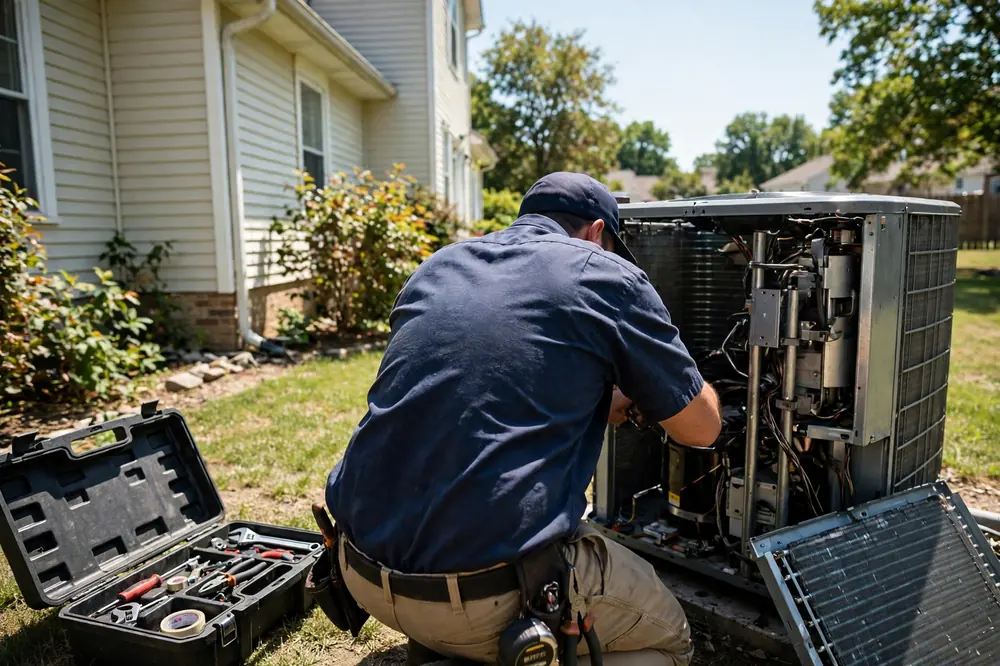
- Outdoor unit: if the condenser fan is not spinning and the unit is humming, switch the system off — that pattern often means a failed capacitor, and running it can damage the compressor.
If those checks do not bring the cooling back, the problem needs a technician. Do not open electrical panels or handle refrigerant — under federal EPA Section 608 rules, refrigerant may only be handled by certified technicians.
Why AC failure in Phoenix is different
Phoenix averages 111 days a year at or above 100°F and about 21 days at or above 110°F (National Weather Service climate normals). Average daily highs run about 104°F in June, 106°F in July and 104°F in August, and the cooling season stretches across roughly eight to nine months of the year. Equipment here simply works more hours, in harsher heat, than almost anywhere else in the country — which is why systems wear out sooner and why a breakdown in July is a household emergency, not an inconvenience.
What happens when you call
Calling connects you with an independent Phoenix-area HVAC technician through our referral line. Here is the honest sequence:
- You describe the problem — no cooling, strange noise, a system that will not start, or a unit you think is at the end of its life.
- You are matched with an independent local technician who handles that kind of work in Phoenix.
- The technician inspects the system and quotes the work. Pricing is set by the technician, after seeing the equipment — never by this website.
- You decide. Nothing proceeds without your approval, and payment for work is arranged directly with the technician.
Before any work begins, ask to see the technician's Arizona ROC licence. Residential air conditioning work in Arizona falls under the ROC's R-39 (Air Conditioning and Refrigeration) classification, and you can verify a licence number on the Arizona Registrar of Contractors website.